Student Management and Leadership
Discover how Admiralty Primary School develops every student into a leader and fosters a safe, caring school community.
Student Leadership
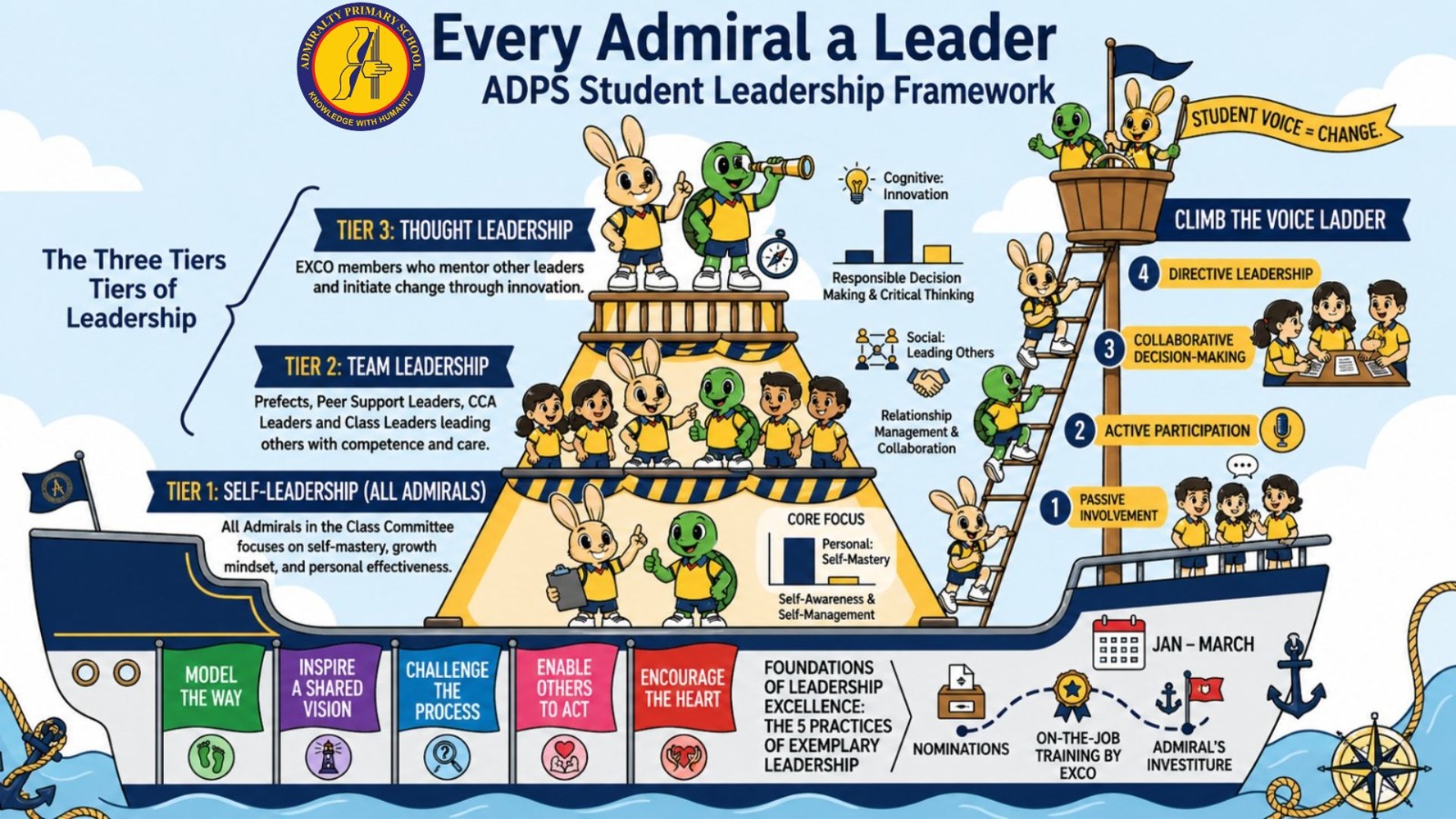
The ADPS Student Leadership Development framework is built upon the foundational belief that "Every Admiral is a Leader".
Central to the framework is a three-tiered leadership model—Self-Leadership, Team Leadership, and Thought Leadership, in alignment to MOE’s E21CC SE Competencies. The school adopts James Kouzes and Barry Posner’s "The Leadership Challenge" as a primary guiding principle, emphasizing five practices of exemplary leadership: Model the Way, Inspire a Shared Vision, Challenge the Process, Enable Others to Act, and Encourage the Heart.
2025-2027 Key strategic objectives focus on enhancing Student Voice, Agency, and Advocacy (VAA) through ownership, empowerment, and collective responsibility. This is operationalized through the "Voice Ladder," which moves students from non-involvement toward directive leadership where they design initiatives and lead change.
1.1 Relationship between the “Voice Ladder” and the Three-Tiered Leadership Model
Tier 1 (Self-Leadership) and the Foundation of Voice
Tier 1 focuses on "Leading Myself" and is the baseline for all Admirals.
The Voice Ladder: On the Voice Ladder, this is the transition from Non-Involvement to a Passive role where students respond or "do as told" while beginning to clarify their own values.
Tier 2 (Team Leadership) and Active Collaboration
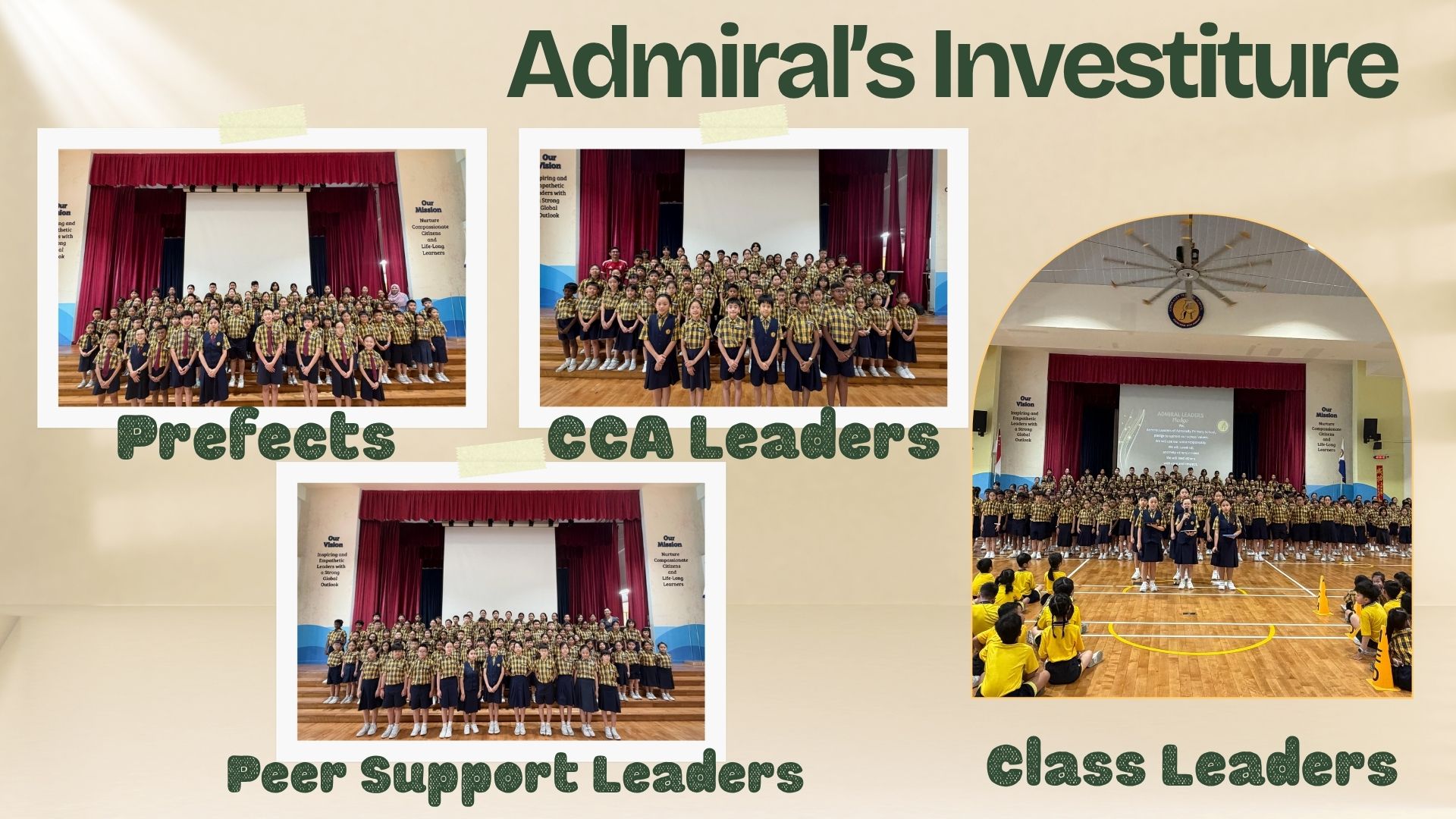
Tier 2 identifies Admirals (Prefects, PSL, Class Leaders, CCA Leaders) who lead others with "competence and care".
The Voice Ladder: This aligns with the Active step on the ladder, where student leaders make suggestions for improvement and participate in co-planning school or class activities.
Tier 3 (Thought Leadership) and Leading Change
Tier 3 is for senior EXCO leaders who engage in "metacognition to challenge existing ideas".
The Voice Ladder: This represents the Directive stage, where students have the autonomy to design the initiative and lead its execution for the school and community.
1.2 Key Roles and Responsibilities of Leaders
Tier 1: Leading Self (All Admirals)
Every Admiral is assigned to leadership duty in the Class Committee at this level. Responsibilities: Students are responsible for personal effectiveness and self-mastery. This involves managing their own emotions, being aware of their strengths, and striving for constant improvement to achieve personal goals
Tier 2: Leading Others
Prefects:
Core Focus: Discipline.
Responsibilities: They are expected to enforce school rules, monitor student behavior, and act as role models by demonstrating school values.
Key Activities: Their duties include Parade Square Assembly command and announcements, conducting termly attire checks, managing late-coming duties, and ushering during school events.
Peer Support Leaders (PSL):
Core Focus: Support.
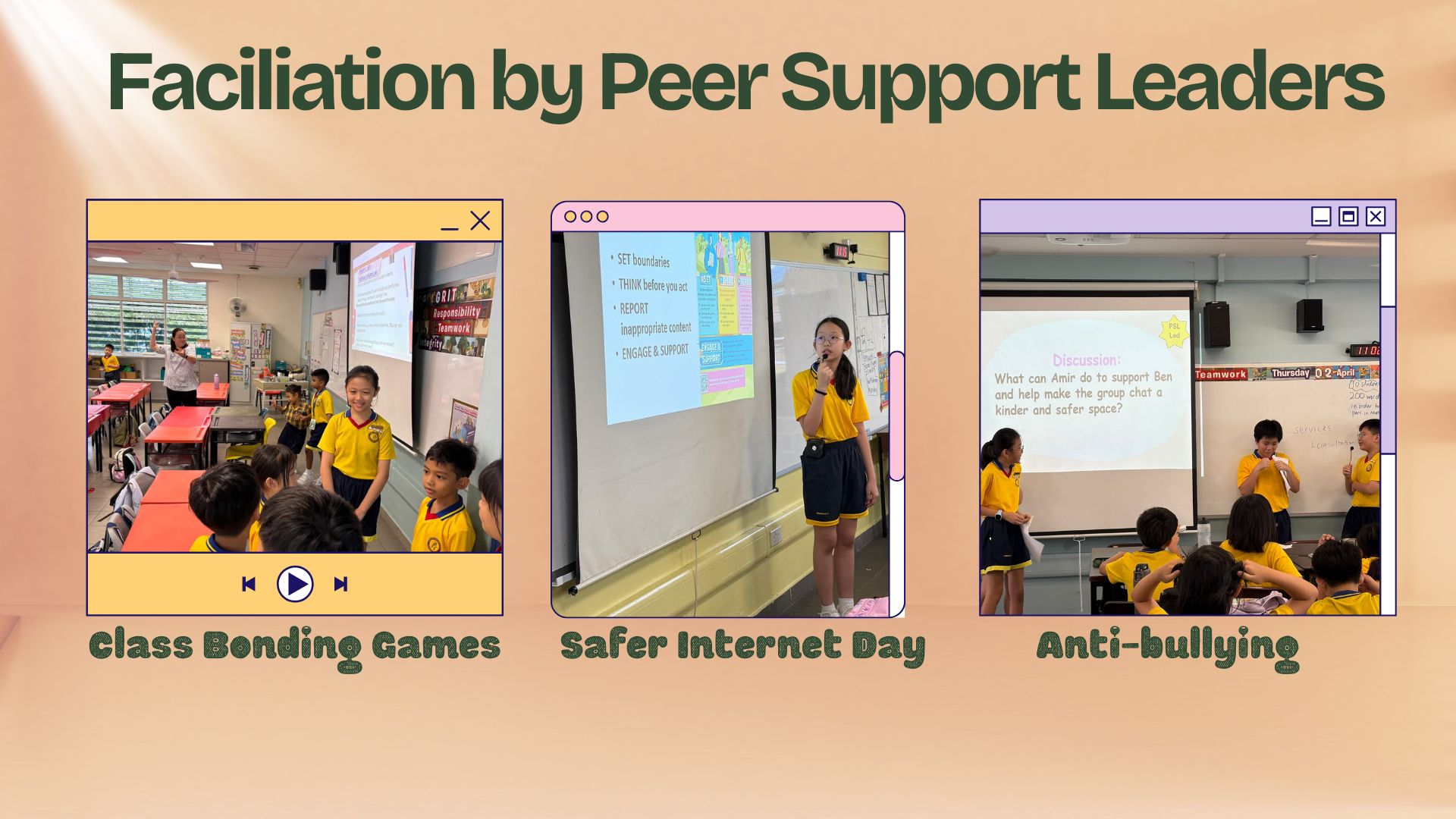
Responsibilities: They focus on peer helping, promoting bonding among students, and building a positive culture within the classroom.
Key Activities: They lead class bonding sessions, monthly birthday celebrations, facilitate school mindfulness’ breathing programme, and support nation-wide initiatives like Anti-Bullying and Cyber wellness.
CCA Leaders:
Core Focus: School Pride.
Responsibilities: They lead activities within their respective Co-Curricular Activities (CCAs), foster student participation, and promote pride in the school.
Key Activities: They assist with CCA training and conduct the CCA Fair.
Class Leaders:
Core Focus: Class Management.
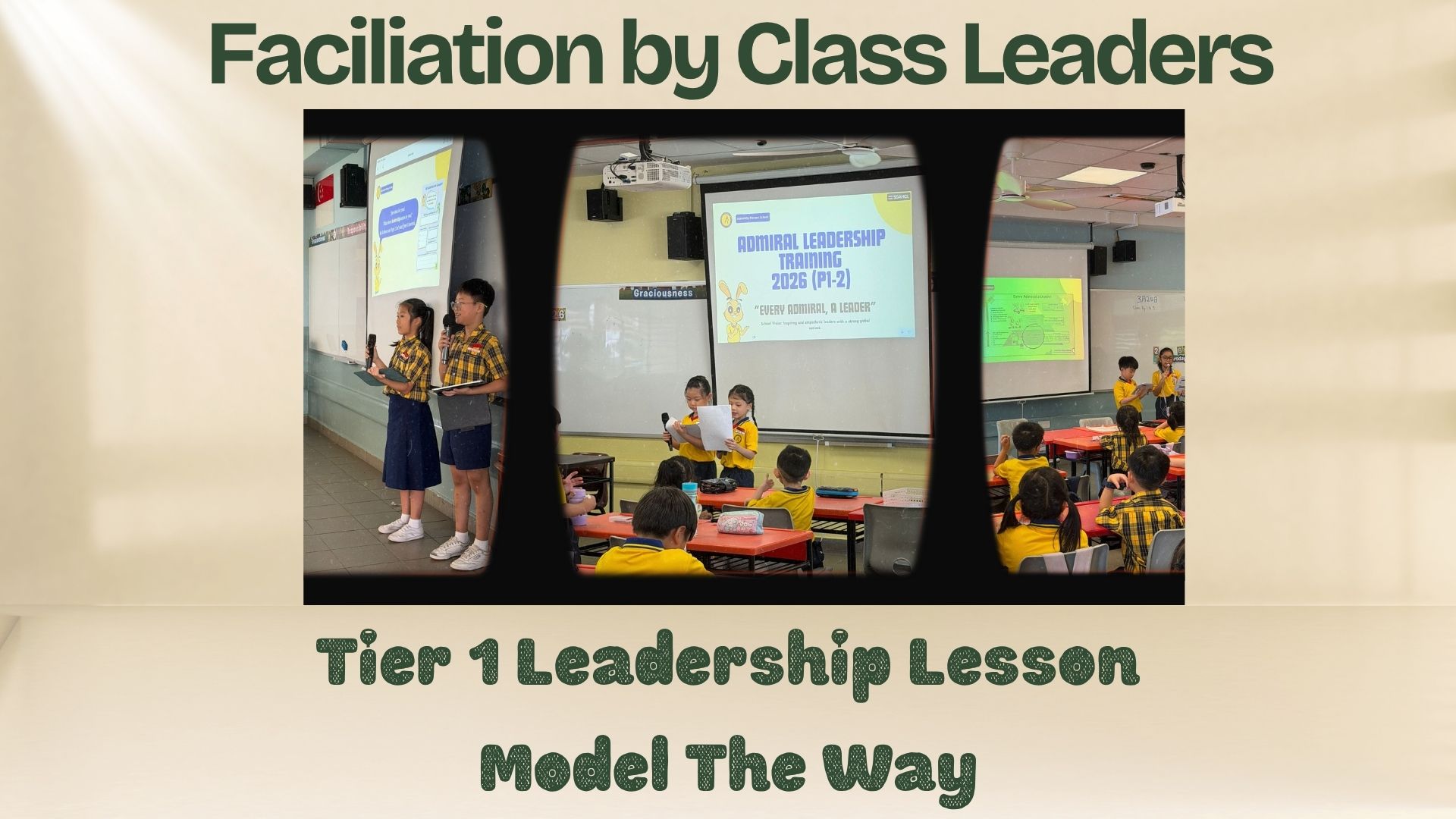
Responsibilities: They lead Class Committees and support Form Teachers with daily routines to encourage student engagement and a positive class culture.
Key Activities: They facilitate Tier 1 "Model the Way" leadership lessons for their classmates, and role-model through acting in Admiral’s videos.
Tier 3: Leading Leaders (EXCO)
Tier 3 is comprised of senior leaders from the Prefect, PSL, and CCA groups who have been invited to join the Executive Committee (EXCO).
Responsibilities: These leaders guide and mentor other student leaders. They are tasked with using quality insight and innovation to create value for the school and the wider community.
Focus: They engage in metacognition to challenge existing ideas and initiate meaningful change.
Key Activities: On-the-job training for newly nominated leaders. Admiral duties deployment. Organized school events such as Teacher’s Day Concert, Admiral Leaders’ VIA.
Student Management
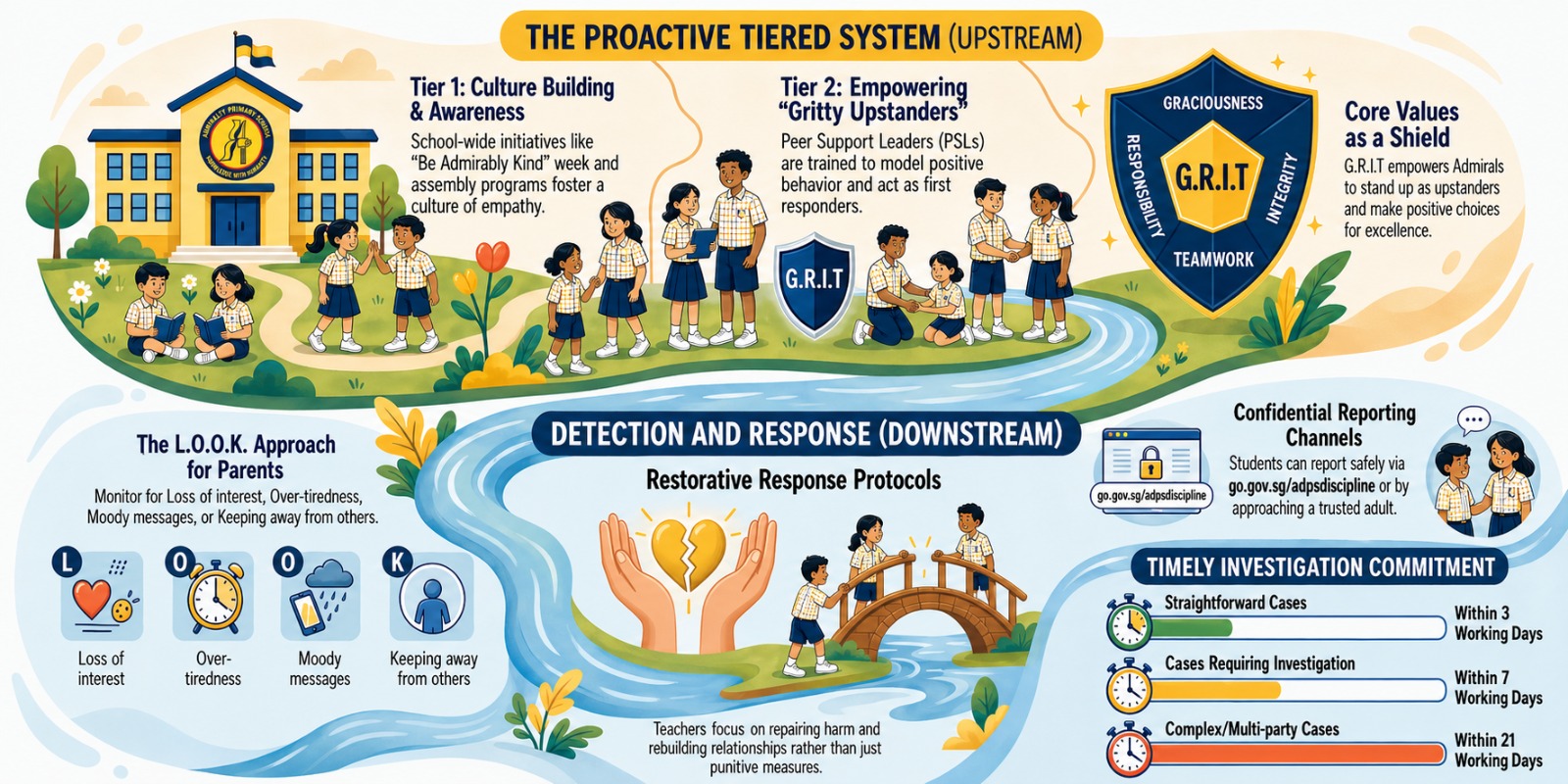
2.1 Anti-Bullying Framework
Admiralty Primary School’s framework for student management, specifically regarding bullying and hurtful behavior, is the Anti-Bullying Framework (Tiered System of Support or TSS). This framework is divided into Upstream efforts (preventive measures to build culture) and Downstream efforts (responsive measures to manage incidents) and structured into three distinct tiers.
Tier 1: School-Wide Prevention (Upstream)
The first tier focuses on building a foundation of positive behavior and awareness for all students.
Building Positive Class Culture: Form Teachers and Peer Support Leaders (PSLs) work together to create safe, caring environments through bonding activities, celebrating birthdays, and the P1 Buddy Programme.
Education and Awareness: The school uses Assembly Programmes and Form Teacher Guidance Period (FTGP) lessons to teach empathy, respectful behavior, and responsible decision-making.
Campaigns: Initiatives like “Be Admirably Kind” Week promote kindness in words and actions.
Nurturing Upstanders: Weekly morning messages and videos by "Admiral Leaders" reinforce school values and teach students how to respond to hurtful behavior.
Tier 2: Targeted Peer Support (Upstream)
The second tier empowers specific student leaders to maintain the school's social fabric.
Peer Support Leaders (PSLs) as Upstanders: PSLs serve as the first point of contact for their peers.
Structured Training: PSLs undergo specific training, such as the “Gritty Upstanders” Workshop and Digital Citizenship workshops, to equip them with the skills to support classmates and promote a culture of care.
Tier 3: Responsive Management (Downstream)
The third tier focuses on how the school handles reported incidents.
Confidential Reporting: Students can report bullying through a safe online platform (https://go.gov.sg/adpsdiscipline (opens in new tab)), or by approaching PSLs or trusted adults.
Safety and Support: The immediate priority is the physical and psychological safety of students, followed by timely investigations and support plans for both the victims and those who caused harm
Restorative Practices: Teachers are trained to manage incidents by focusing on accountability, repairing harm, and rebuilding relationships rather than just punishment.