Mathematics
Builds strong Maths foundations through hands-on learning, problem-solving, and fun programmes for every child.
Teaching and Learning Processes
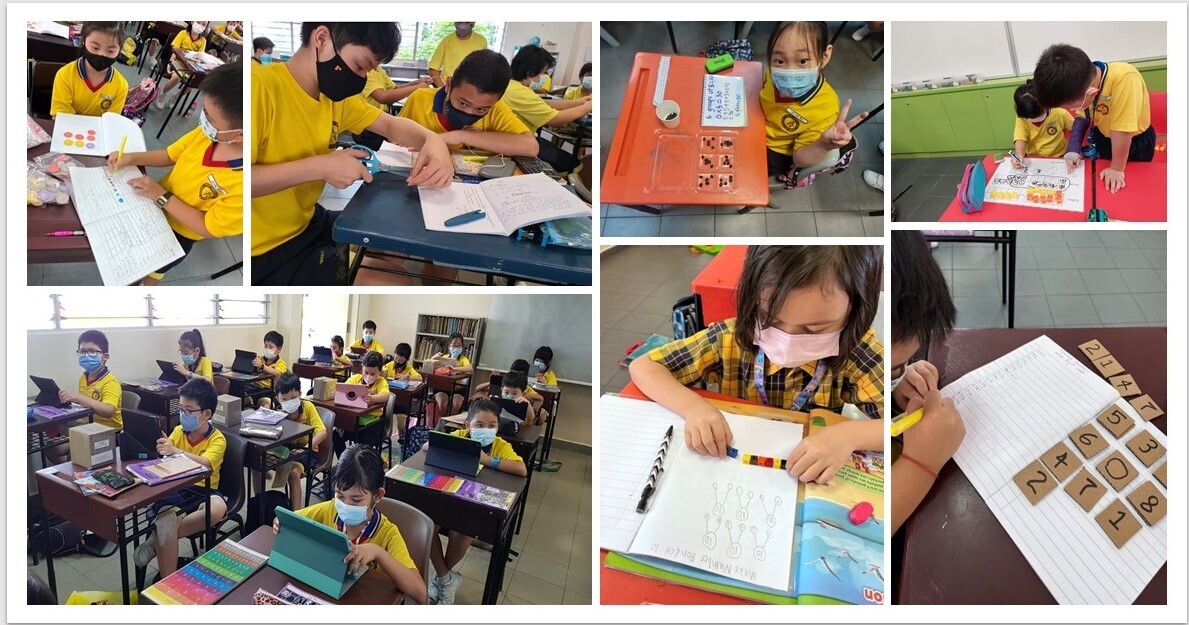
Concrete-Pictorial-Abstract Approach
In Admiralty Primary, we provide meaningful learning experiences to bring about deep learning where students learn to transfer their knowledge and skills to solve complex problems.
Through the Concrete-Pictorial-Abstract (CPA) approach in teaching and learning, students learn to make connections and meanings with the more abstract concepts. Students use concrete materials like interlocked cubes, fraction discs and other materials to help them understand the concepts. Students also learn to draw models and see the connection between these models and their related equations.
Development of metacognition
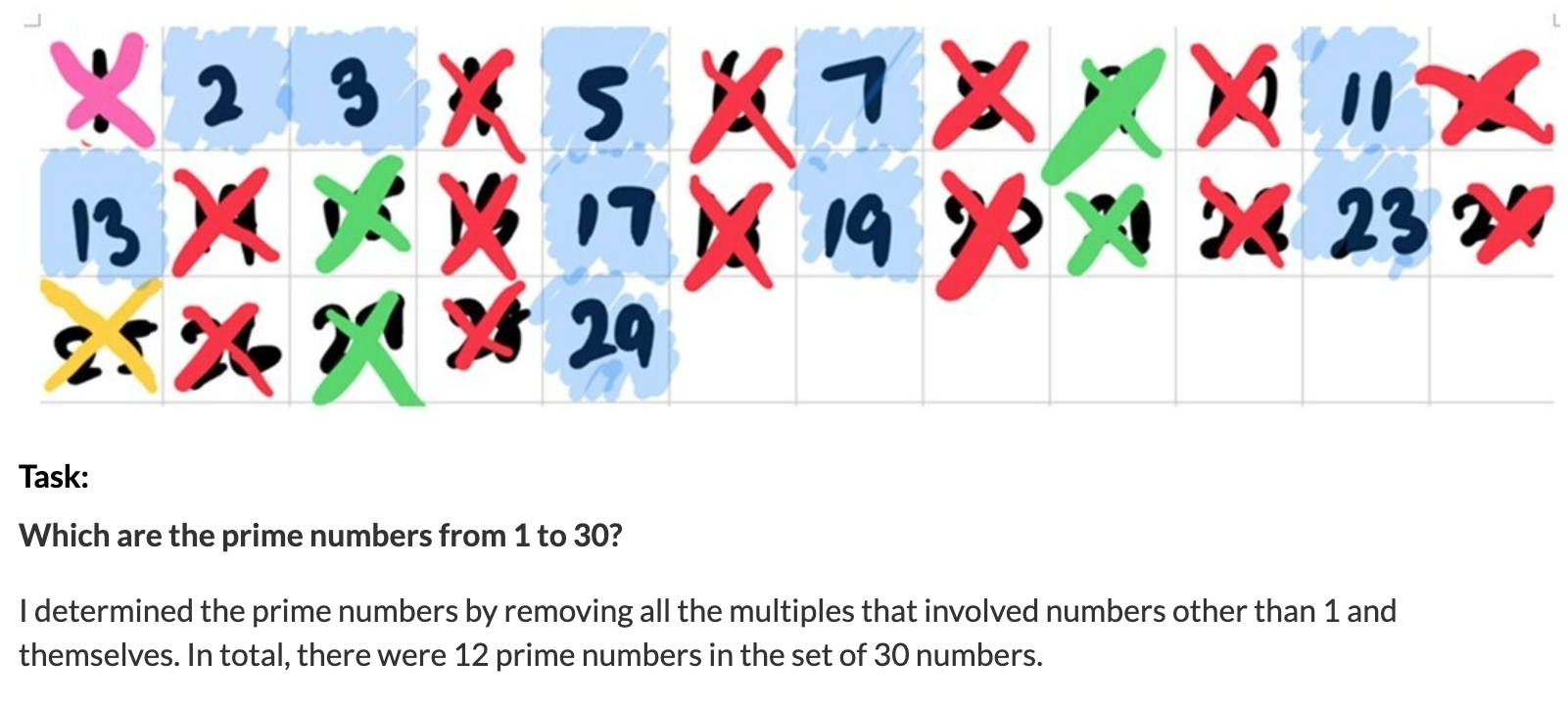
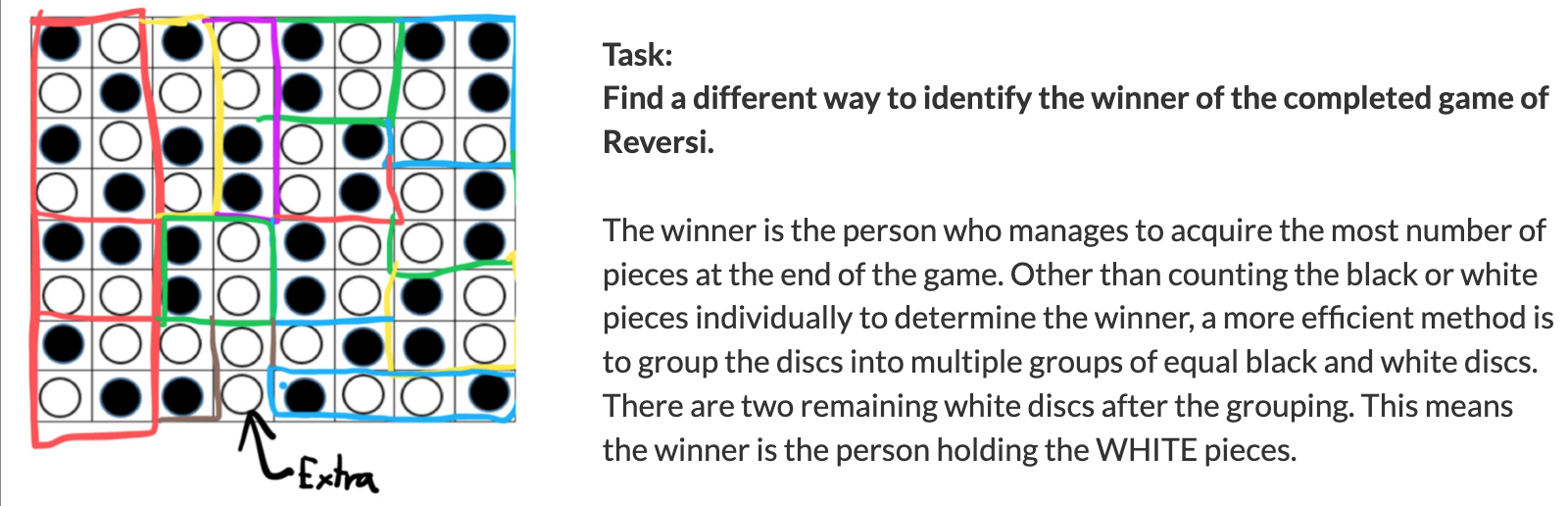
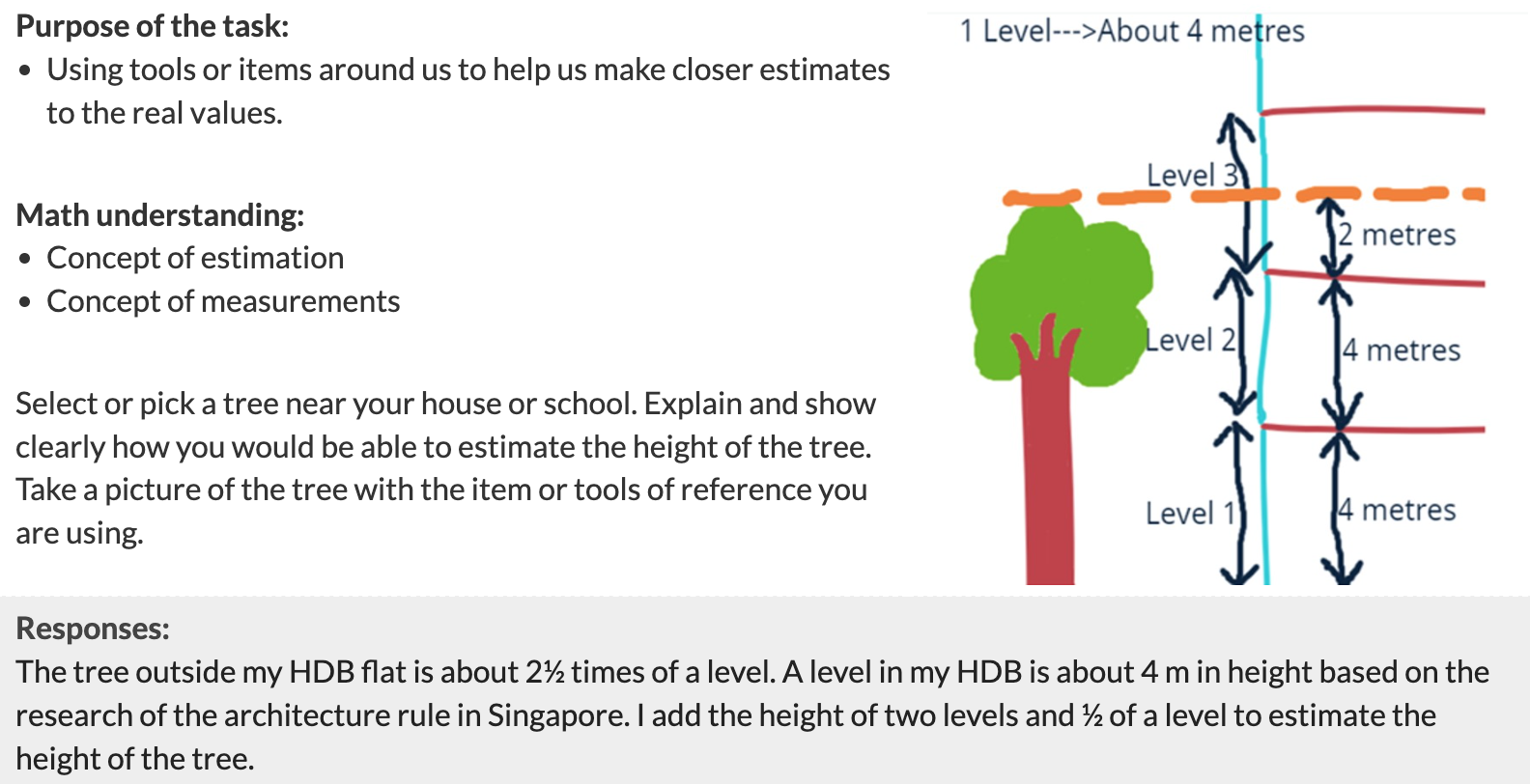
In Math lessons, students are encouraged to develop their reasoning and metacognitive skills. Metacognition is the awareness and regulation of one’s thinking. Students are often exposed to non-routine or open-ended problems so that they learn to decide on the problem-solving strategies to be used. Checking for the reasonableness of their answers and thinking through the logic of their solutions are also part of the metacognitive processes.
Below are some of the students’ metacognitive responses to the Math tasks.
Problem-solving strategies
Students will face with problems coming from everyday contexts or in future work situations. Having developed a wide repertoire of problem-solving skills and critical thinking, students will then be able to apply their knowledge to solve complex and non-routine tasks. Some of the general problem-solving strategies will include the Polya’s problem solving strategy and the use of heuristics.
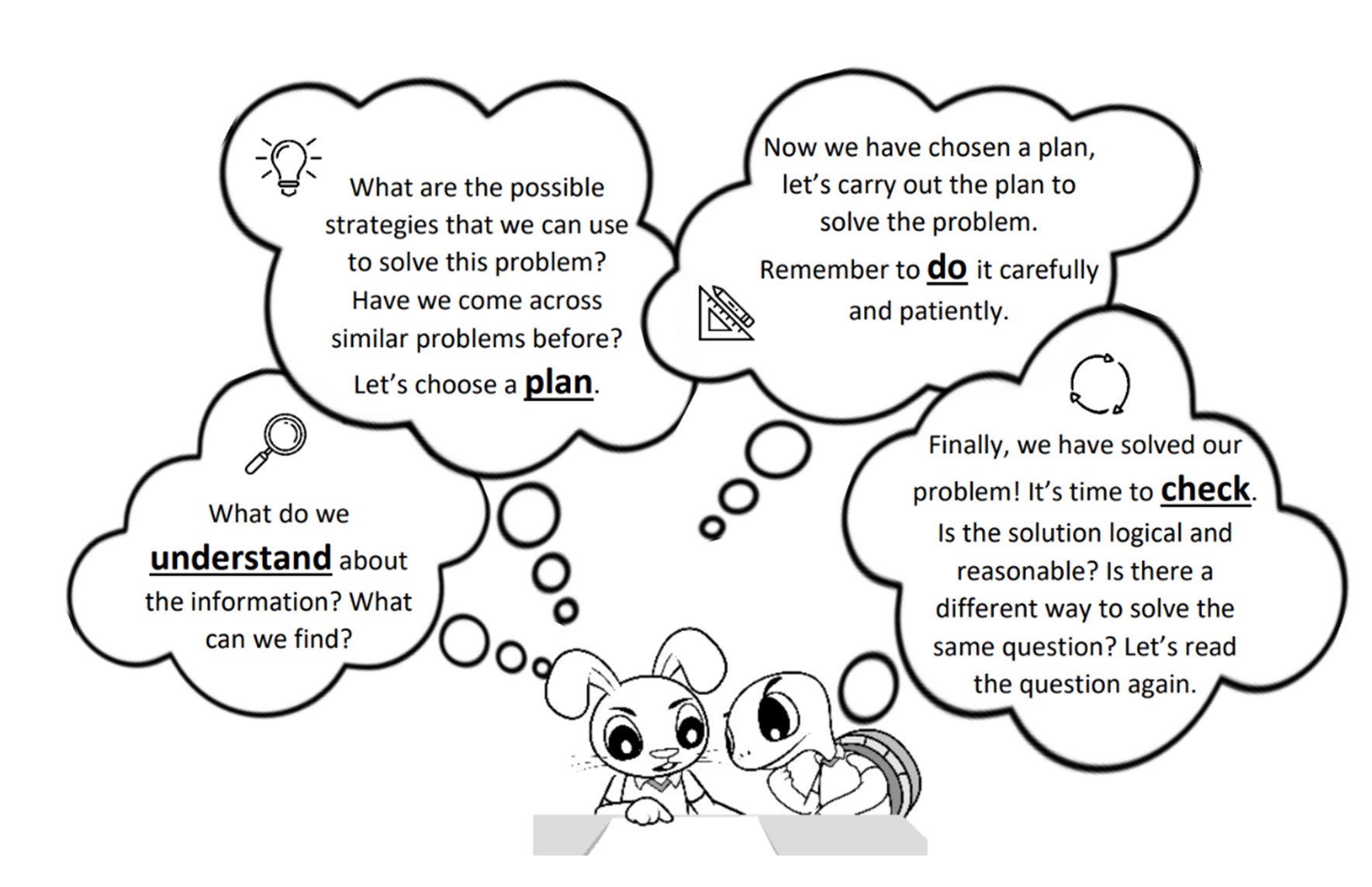
Polya’s 4-Step Problem Solving
George Polya was a mathematician in the 1940s. He devised a systematic process for solving problems that is now referred to by his name, the Polya 4-Step Problem-Solving Process.
Polya’s 4-step is used to guide our students to systematically approach and solve the problem.
Step 1: Understand the problem
Read the problem carefully to understand what is required in the problem.
Draw or write down the information given in the problem in a simpler form
Step 2: Plan what to do/Devise a plan
Choose a strategy to use to solve the problem
Step 3: Do it/Carry out the plan
Carry out your plan to solve the problem.
Step 4: Check the solution
Check the reasonableness of your solution
Seek alternative solutions
The common Heuristics to solve problems also include:
Make a systematic listing
Guess and check / Make a supposition or assumption
Simplify the problem
Look for a pattern
Work backwards
Model drawing is an important problem-solving strategy that enables students to translate information of the given problem into a pictorial form which aid students’ understanding of the problem. As the students advance in Math learning, the more complex problem sums can be broken down using model drawing. Students learn to visualize different parts of the information to see how the parts are related to one another to form a larger pattern. Many of the more complex model drawings are permutations from the basic part-whole and comparison models from the lower primary. Therefore, it is an essential problem-solving skill that will anchor the students’ problem-solving competency.
Learn-with-Technology tasks
In the digital era, students must be equipped with the necessary knowledge, skills, and dispositions to thrive in an interconnected, diverse, and rapidly changing world. The secondary and higher learning institution students have been learning through a mix of home-based and in-school activities, and leverage both online and offline approaches to learning. In Admiralty Primary, we would like to prepare our students early for this blended learning experience.
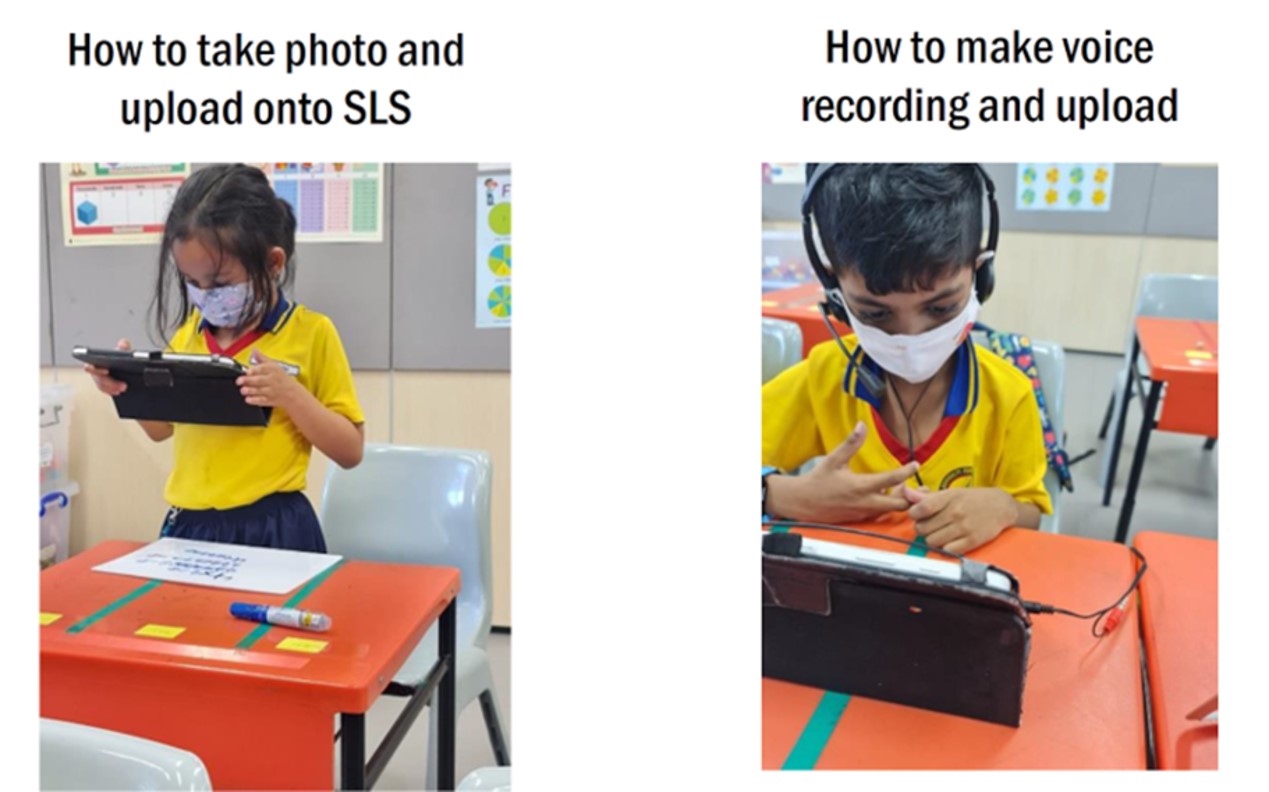
Learn-with-Technology (LwT) task is the meaningful incorporation of technology in daily teaching and learning. It is a shift in the learning culture that provides our students with more opportunities to learn at their own pace, and there is dedicated time and space to allow them to pursue their own interests and learn outside of the curriculum.
LwT tasks also go beyond the classrooms with the intentional extension of topics from daily classroom teaching to e-learning on designated days and school holidays. Students are encouraged to explore the affordances of technology to represent and present what they have discovered and learnt. The LwT routines for Math were built up from the lower primary years.
Differentiated Instructions
At Admiralty Primary, we believe that every child can learn Math. The department provides additional support to the students who need more guidance and help in learning Math through specialized early intervention programmes like Learning Support for Math (LSM).
LSM is an early intervention effort that provides additional support to students who do not have the necessary foundational numeracy skills and knowledge to access the Primary 1 Mathematics curriculum. Students who need such early intervention are identified at the beginning of their Primary 1 education. Specially trained LSM teachers are assigned to teach and guide these students. The LSM lessons are structured with lots of hands-on work with concrete materials and factual fluency to strengthen the Math foundation of the students.
The students are grouped into smaller groups so that each student would receive more personal attention from the LSM teachers, and these students focus on small successes to build on their motivation to learn Math. There are regular check points to assess the students’ learning. Students who improve and cope better with the foundational numeracy skills and knowledge will ultimately graduate from the LSM programme. Students who still need such support after their lower primary years will continue to be supported at their mid-primary years.
Students who have a passion in learning Math are given opportunities to further develop and strengthen their math reasoning skills with the incorporation of Excellence 2000 (E2K) Math resources in their math lessons. The students learn to deepen their conceptual understanding through an inquiry approach. They work either independently or collaborate with their peers in mathematical explorations such as games and puzzles as well as mathematical investigations. Such tasks are usually open-ended in nature to facilitate the thinking, reasoning, and to raise students’ awareness that not all math problems have a fixed one answer solution.
Department Programme
KooBits programme
Admiralty Primary has engaged an online math learning portal from Singapore, KooBits Problem Sums, as an additional learning resource for our students. This portal is developed to help build problem-solving skills in our students and to promote self-directed learning. Our students can access Self-Practice, Homework, Mock Tests in the system, and be engaged in daily activities and Math games to earn points and win prizes. This technology-assisted learning platform is used to promote independent and self-directed learning.
Family Math
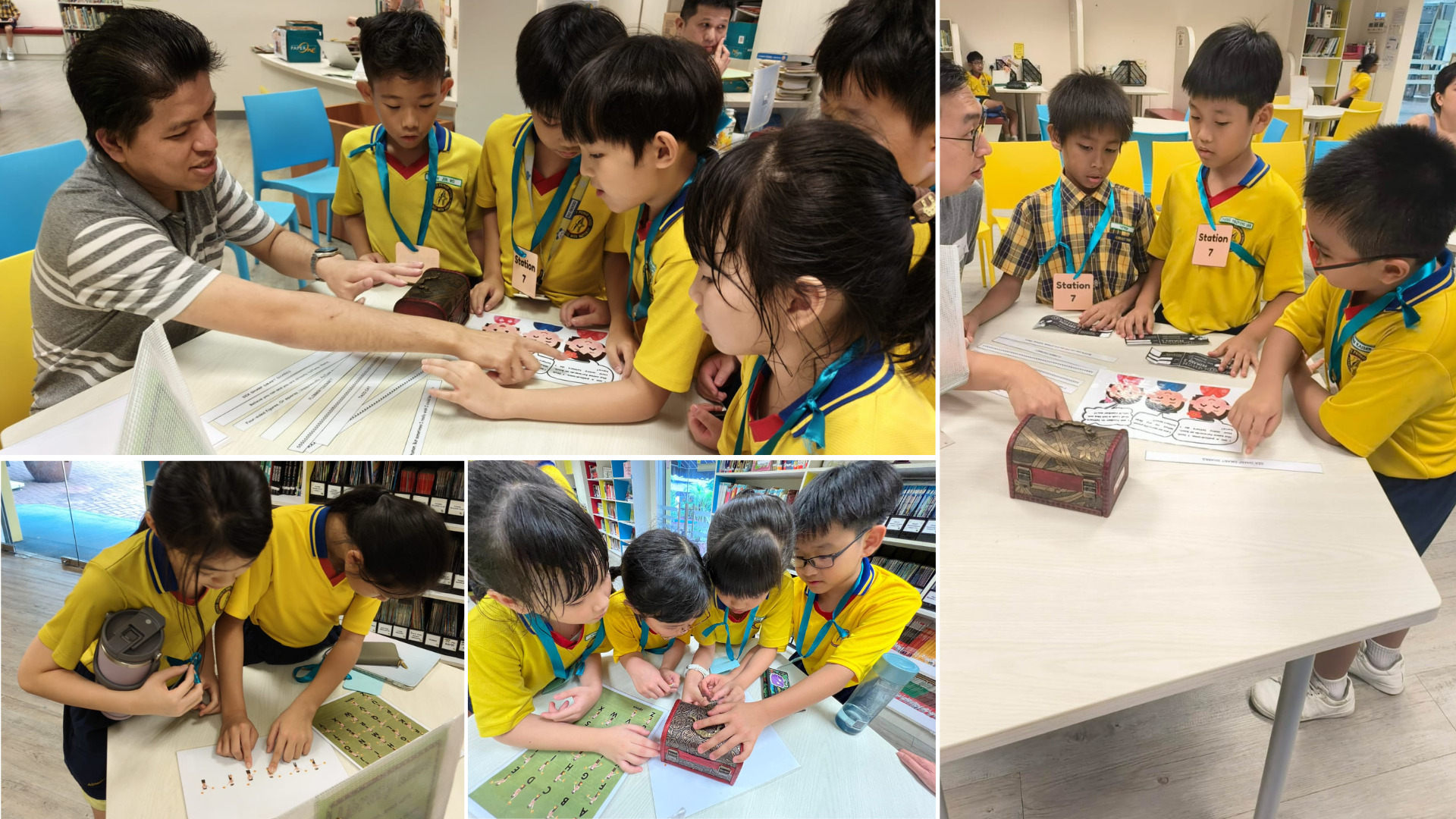
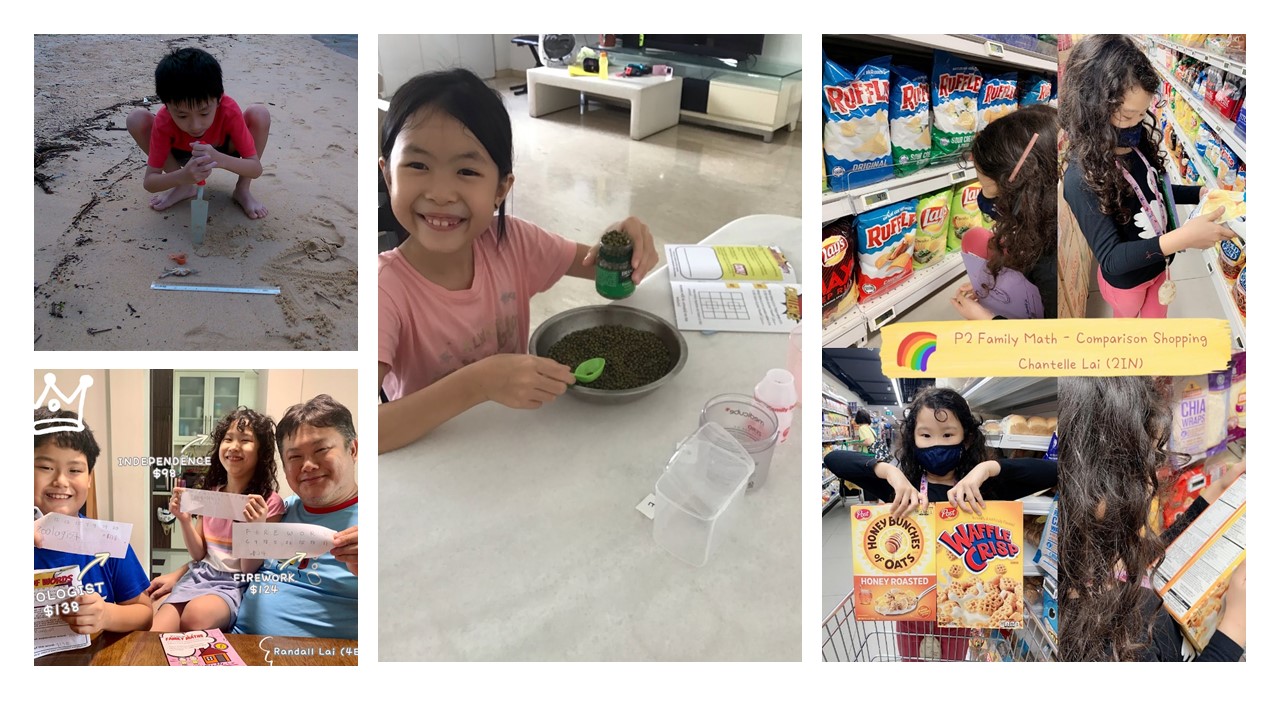
Family Math activities are designed to engage families in the students’ learning experiences outside of school. Families are well positioned to talk about quantity, counting, shapes, patterns, and other math concepts at home, in the parks, or during grocery shopping. Family Math is usually conducted during June holidays. Through the activities, students take part in experiential learning that involves explorations, journaling, hands-on activities, quizzes, and games. Family members get together to do fun hands-on activities that allow the students to learn through real life experiences alongside with their families. The parents enjoy these meaningful bonding moments with their children and the children are also more motivated to take ownership of their own learning. The variety of activities also give parents a greater insight into their children’s learning.
Math@Lunch
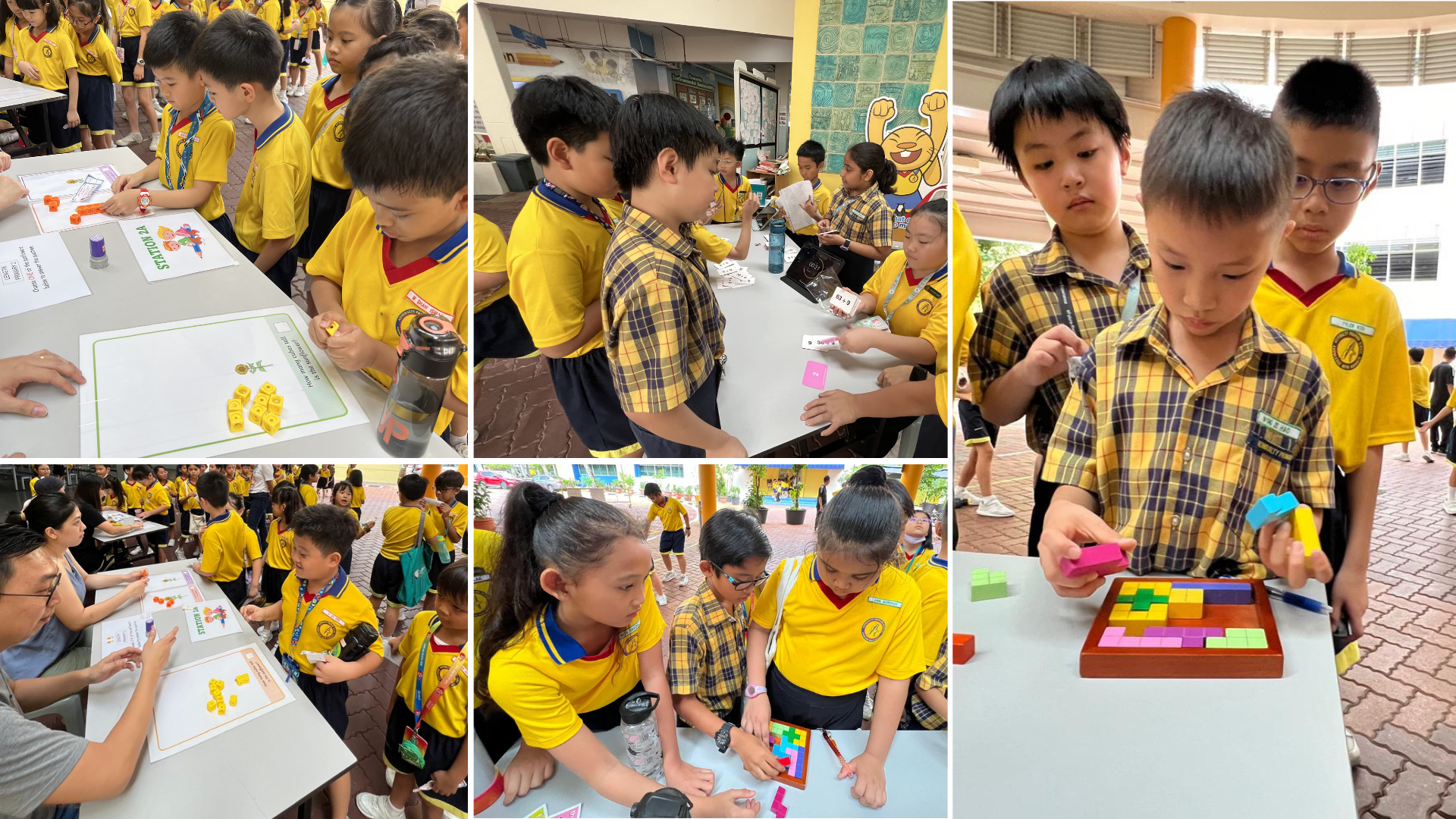
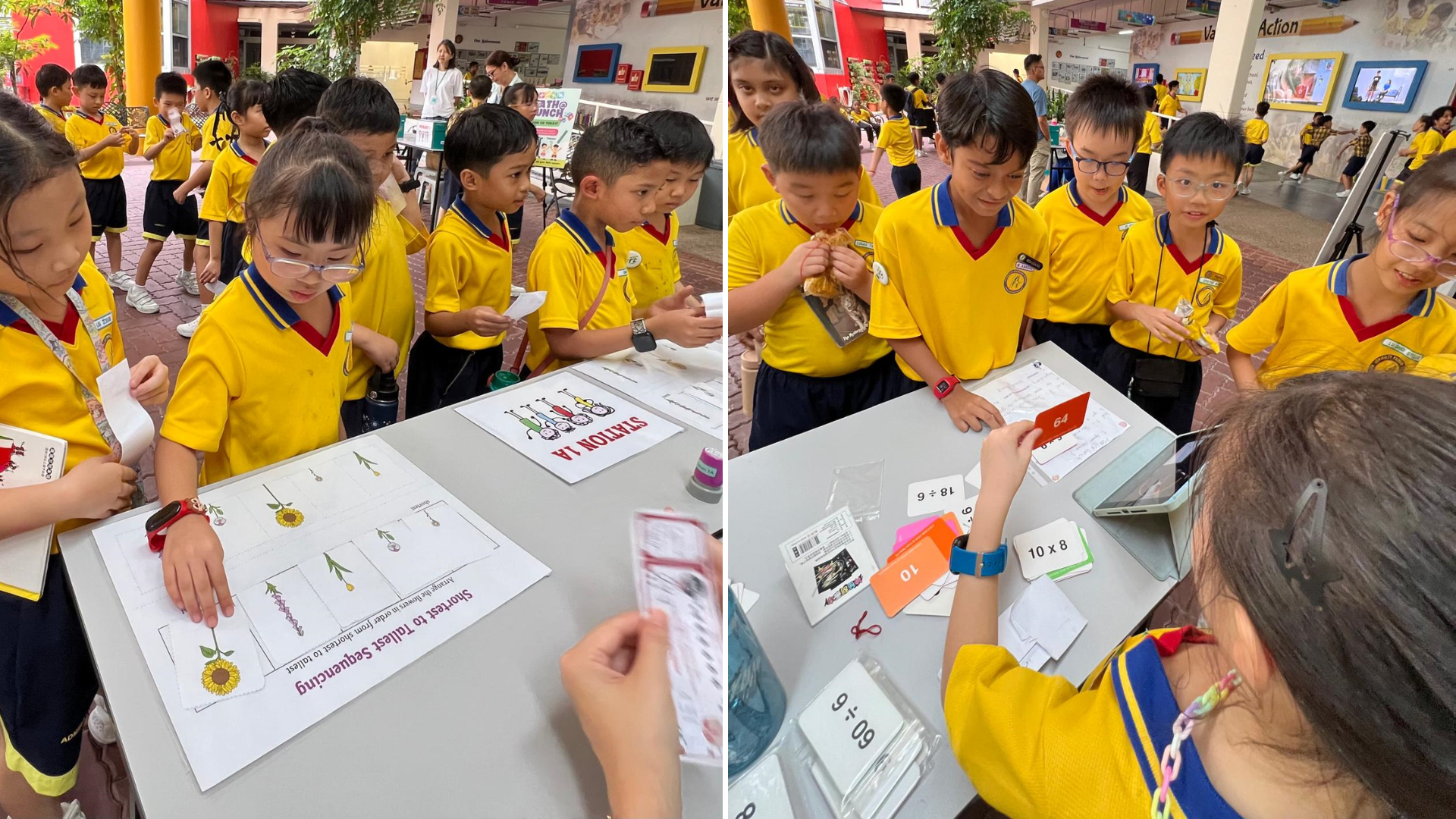
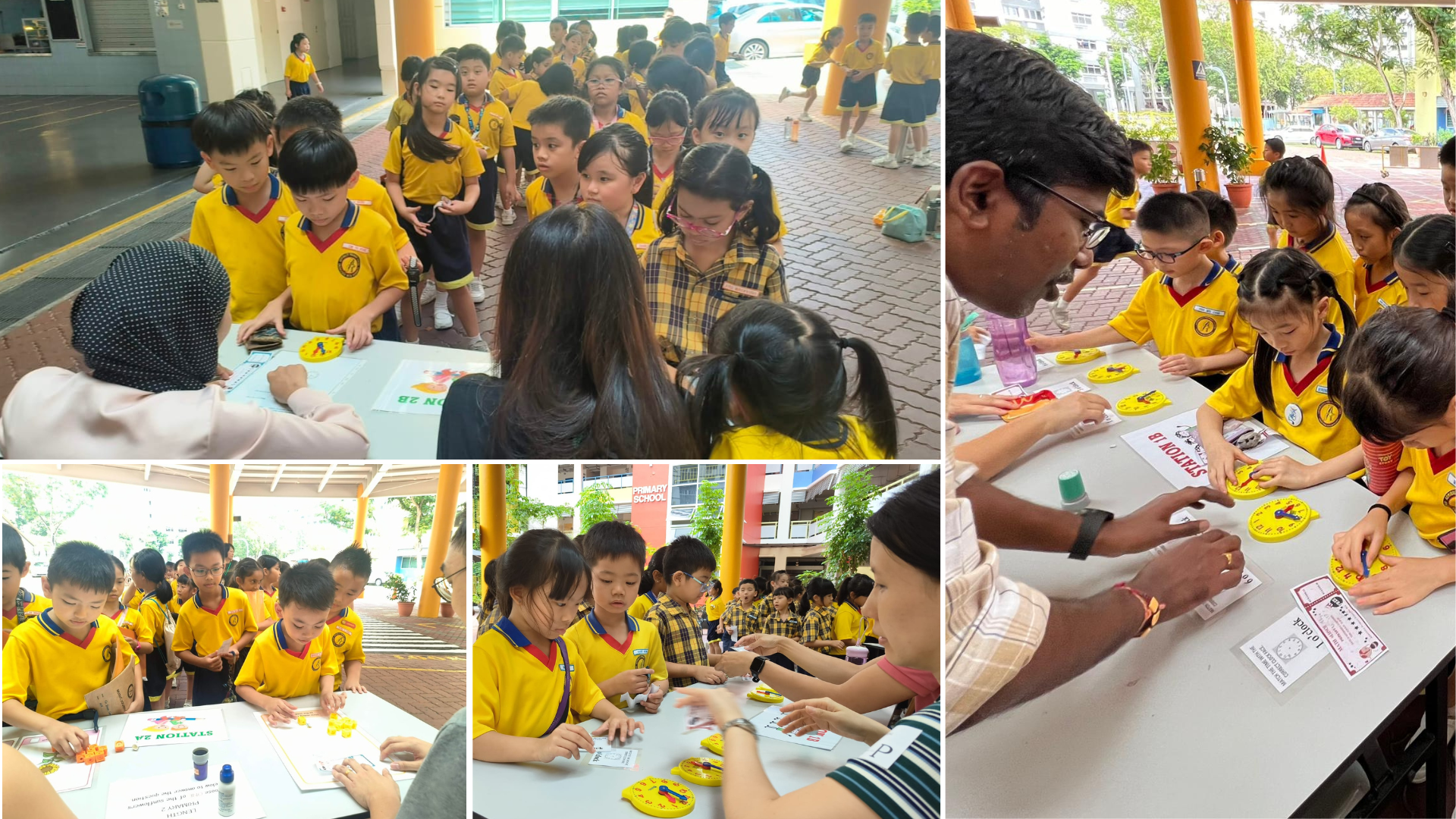
Math@Lunch is conducted once every term during lunch hour near the canteen area to foster interest in Math. Our students get to experience different Math-related activities such as Math video screening, games, and quizzes after enjoying their meals. The objective of the programme is to encourage students to do Mathematics outside the classroom and to inculcate their interest in using Mathematics through the fun activities. Students get to play various digital Math games or hands-on manipulatives such as number cards, tangrams, and board games. They can also win tokens by participating in the booth challenge or online quizzes.